
Introduction to Spicy Korean Ramen
The Rise in Popularity of Korean Cuisine
In recent years, Korean cuisine has surged in popularity across the globe, captivating food enthusiasts with its unique flavors and remarkable variety. This culinary movement has been fueled by the global rise of K-pop culture, Korean dramas, and social media platforms showcasing tantalizing food experiences. People everywhere are excited to explore bold, spicy flavors, making dishes like spicy Korean ramen the stars of many dining tables.
But what exactly makes spicy Korean ramen so irresistible? First off, it’s a delightful medley of rich, savory ingredients. Traditionally crafted from wheat-based noodles, the ramen is steeped in a spicy broth typically flavored with gochujang (Korean chili paste) or gochugaru (Korean chili flakes). The infusion of these ingredients creates a complex, mouthwatering profile that awakens the senses and keeps you coming back for more.
Korean ramen isn't just about heat; it's a dish rich in texture and flavor. Imagine slurping perfectly cooked noodles that carry the warmth of the spicy broth, accompanied by a range of toppings like grilled beef, soft-boiled eggs, and fresh green onions, all harmonizing beautifully on the palate. If you’re curious to learn more about the nuances of Korean food, check out this insightful article from the Korean Food Foundation.
Additionally, for those seeking comfort food, spicy Korean ramen offers the perfect dish to cozy up with after a long day. It’s easy to whip up in your kitchen, making it a practical choice for young professionals juggling busy schedules. Just picture yourself savoring this dish while binge-watching your favorite K-drama; it’s a delightful way to unwind!
In our recipe for Spicy Korean Ramen with Grilled Beef & Creamy Sauce, we'll take this beloved dish to the next level by incorporating tender grilled beef and a velvety, creamy sauce. Not only will this elevate the traditional flavors, but it will also provide a satisfying twist that’s sure to impress your friends and family. So get ready to dive into the world of Korean culinary delights—you won't regret it!
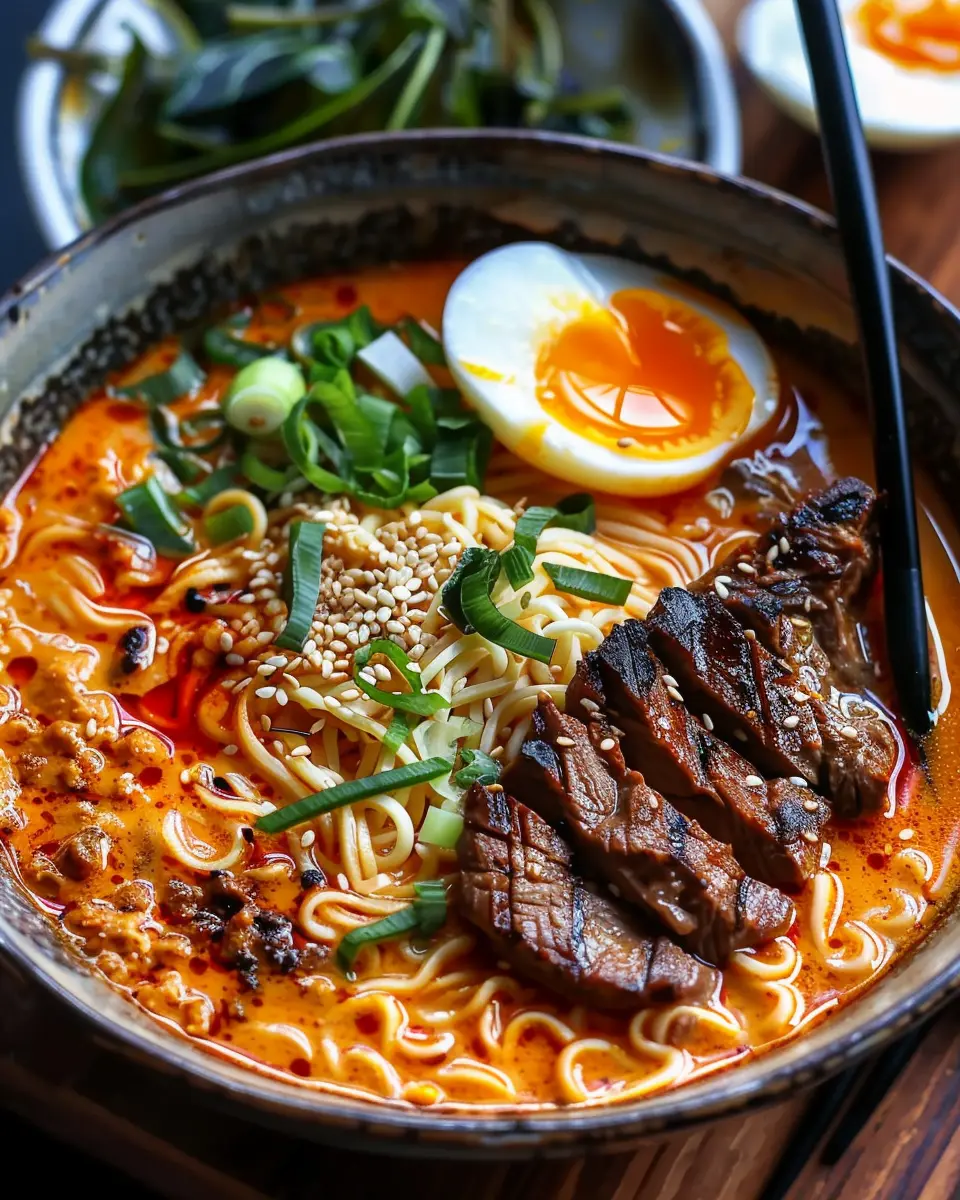
Ingredients for Spicy Korean Ramen
When you're gearing up to make spicy Korean ramen, having the right ingredients is key. Here’s what you need to get that flavor-packed bowl ready.
Essential ingredients
To create your delicious bowl of spicy Korean ramen, ensure you have:
- Ramen noodles: Fresh or dried works, but fresh really enhances the dish.
- Broth: Use a beef or vegetable broth as your base for deep flavors.
- Gochujang: This Korean chili paste brings that signature heat and sweetness.
- Beef: Thinly sliced grilled beef will add a savory richness.
- Turkey bacon or chicken ham: For an extra smoky layer of flavor.
- Vegetables: Think green onions, bok choy, or mushrooms for texture and freshness.
- Eggs: A soft-boiled egg gives creaminess and protein to your ramen.
Optional add-ins for extra flavor
Want to elevate your spicy Korean ramen to the next level? Consider these optional ingredients:
- Seafood: Shrimp or fishcake can add a delightful ocean flair.
- Seasonal vegetables: Kale or spinach can keep things vibrant.
- Sesame oil: A drizzle before serving adds a nutty aroma.
- Corn: Sweet corn can balance the dish’s spiciness wonderfully.
Feel free to customize your dish with any of these options for a truly personal touch! For more tips, check out Serious Eats or Korean Bapsang for diverse recipe inspirations.
Preparing Spicy Korean Ramen
If you’re on the hunt for a satisfying, soul-warming meal, look no further than spicy Korean ramen. With its flavorful combination of grilled beef, creamy sauce, and perfectly cooked noodles, this dish is sure to become a staple in your kitchen. Ready to dive in? Let’s get cooking!
Marinate the Beef
To start, we need to elevate the flavor of our beef. Marinating it is crucial; it infuses the meat with deliciousness. You’ll want to use a simple mix of soy sauce, sesame oil, garlic, and a hint of sugar to complement the rich beef taste.
- Ingredients for the Marinade:
- 2 tablespoons soy sauce
- 1 tablespoon sesame oil
- 2 cloves minced garlic
- 1 tablespoon brown sugar
- Optional: a pinch of red pepper flakes for added heat
Combine these ingredients in a bowl, then add your beef (ribeye or sirloin works wonders here!). Let it marinate for at least 30 minutes. This step not only enhances flavor but also makes the beef more tender and juicy. Remember, if you run short on time, even 15 minutes of marinating can make a difference!
Cook the Ramen Noodles
While the beef is soaking up those flavors, it’s time to prepare the ramen noodles. You can use fresh or dried noodles, based on your preference. If using dried, follow the package instructions for cooking time—typically around 3-5 minutes in boiling water.
- Tip: To enhance the flavor, consider adding a tablespoon of salt to the boiling water or even some kombu (dried kelp) for an umami kick.
Once cooked, drain the noodles and rinse them under cold water to stop the cooking process. This also prevents them from becoming mushy as they await their flavorful sauce.
Grill or Sear the Beef
Now that your beef has marinated, it’s time to cook it! Heat a grill pan or skillet over medium-high heat and add a bit of oil. Searing or grilling your beef not only adds texture but also locks in the flavors.
- Cooking Time: Aim for about 3-4 minutes per side, depending on your desired doneness. For a medium-rare finish, look for an internal temperature of about 135°F.
Remove the beef from heat and let it rest for a few minutes before slicing. This allows the juices to redistribute, keeping it moist.
Make the Spicy Cream Sauce
While your beef is cooling, we’ll create the star of the dish: the spicy cream sauce.
- Ingredients:
- 1 cup heavy cream
- 2 tablespoons gochujang (Korean chili paste)
- 1 tablespoon soy sauce
- 1 teaspoon sugar
- Optional: green onions and sesame seeds for garnish
In a medium saucepan, heat the heavy cream over low heat. Gradually whisk in the gochujang and soy sauce until combined, then stir in the sugar. Allow this to simmer gently until the sauce thickens, about 5 minutes. The result? A luxuriously spicy and creamy sauce that will coat our noodles perfectly.
Combine Noodles with Sauce
Once the sauce is ready, add your cooked ramen noodles right into the saucepan. Toss them gently to ensure an even coat of that delicious sauce. If it seems too thick, you can thin it out with a bit of pasta water or additional cream.
Plate the Dish
Finally, it’s time to plate your spicy Korean ramen masterpiece! Start with a generous mound of sauced noodles, layer the grilled beef on top, and finish with a sprinkle of green onions and sesame seeds for that authentic touch.
Serve immediately and get ready to indulge in a bowl of pure comfort. Whether you're enjoying this dish solo after a long day or sharing it with friends over a cozy dinner, this ramen will surely impress.
Inspired to take your culinary skills up a notch? For more fantastic ideas and techniques, check out websites like Serious Eats and Bon Appétit for in-depth articles and recipes that will inspire your next cooking adventure!
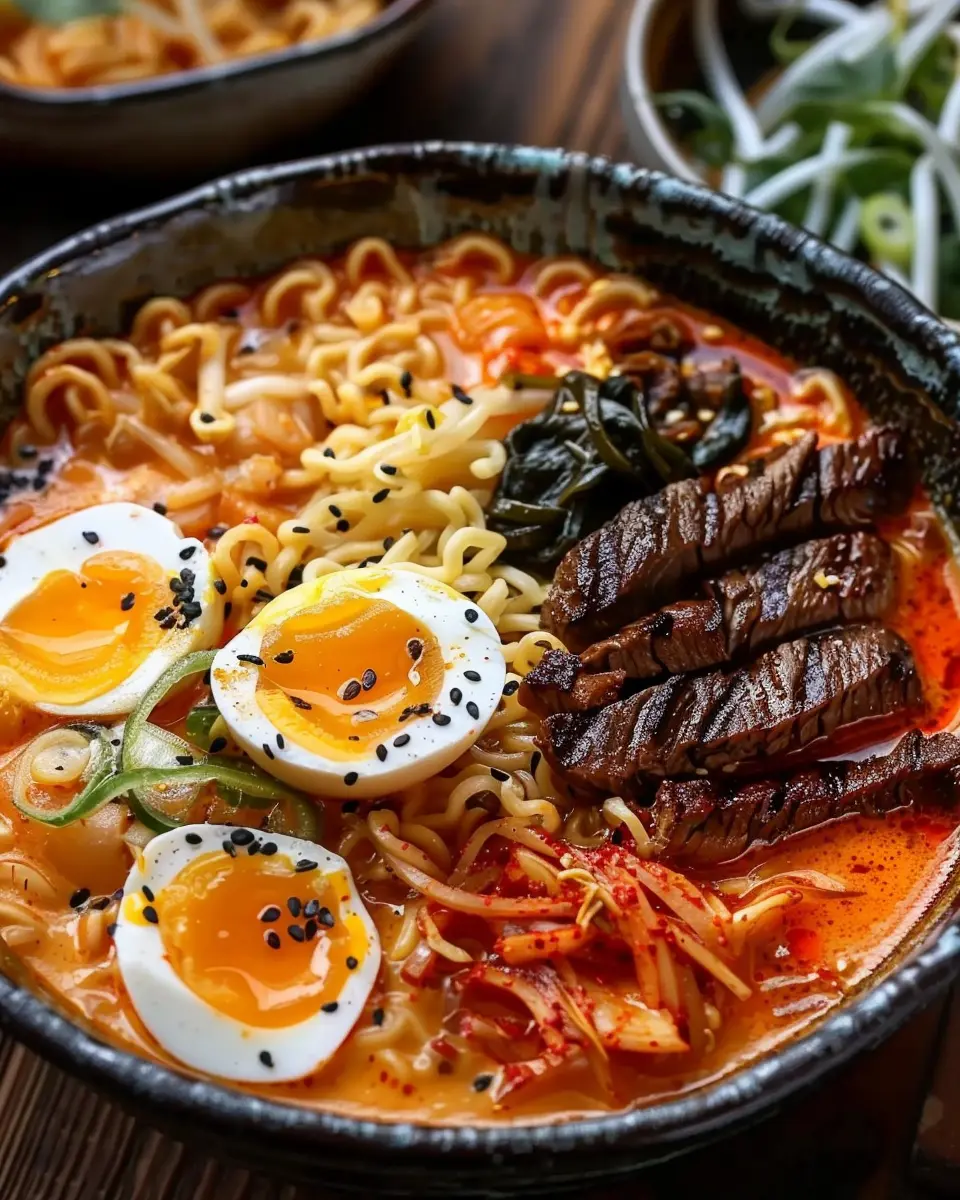
Variations on Spicy Korean Ramen
When it comes to spicy Korean ramen, the possibilities are endless. Whether you prefer plant-based options or indulge in the depths of seafood flavors, there’s something for everyone. Let’s dive into two delicious variations you can easily whip up at home!
Vegetarian Spicy Ramen
Not all ramen needs meat to be packed with flavor! For a comforting vegetarian version, swap out beef for a variety of fresh vegetables. Here’s how you can elevate your spicy Korean ramen experience:
- Use an umami-rich vegetable broth as your base.
- Add a hearty mix of vegetables like bok choy, bell peppers, and carrots.
- Toss in some sliced mushrooms for that meaty texture.
- Consider topping it off with tofu or tempeh for added protein.
- Finish with a sprinkle of sesame seeds and green onions for a fresh finish.
You can find some excellent vegetable stocks and flavors at Bon Appétit.
Seafood Spicy Ramen
For those who love the ocean's bounty, a seafood twist on your spicy Korean ramen is a fantastic idea! Fresh seafood can elevate your dish with unique flavors. Try this:
- Start with a seafood broth or miso base for a burst of flavor.
- Incorporate ingredients like shrimp, squid, or even mussels.
- Add seaweed salad or nori for that authentic taste.
- Top with a drizzle of sesame oil and a squeeze of lime to brighten the flavors.
Ramen with seafood not only tastes incredible but also adds a nice protein punch. You can learn more about incorporating seafood into your ramen at Serious Eats.
These variations on spicy Korean ramen not only cater to different taste preferences but also let you experiment in the kitchen. So gather your ingredients and enjoy creating your own unique ramen bowl!
Cooking Tips and Notes for Spicy Korean Ramen
When making spicy Korean ramen, there are a few handy tips to elevate your dish.
Selecting Noodles
- Choose your noodles wisely: Opt for chewy, thick ramen noodles for an authentic experience. Fresh noodles are great if you can find them, but instant varieties work too.
Perfecting the Broth
- Temperature matters: Bring your broth to a rolling boil before adding the noodles. This ensures they cook evenly while absorbing all that delicious spice.
- Balance the heat: If you're worried about spiciness, start with a smaller amount of chili paste and add more as needed. Everyone's spice tolerance is different!
Topping it Off
- Customization is key: Add toppings such as grilled beef, soft-boiled eggs, or fresh vegetables. They not only enhance the flavor but add texture and nutrition.
- Remember your sauce: A creamy sauce can counterbalance the heat. Consider mixing in some creamy mayo or yogurt for a delightful twist to your spicy Korean ramen.
Feel free to check out Korean culinary traditions to deepen your appreciation for this dish. Happy cooking!
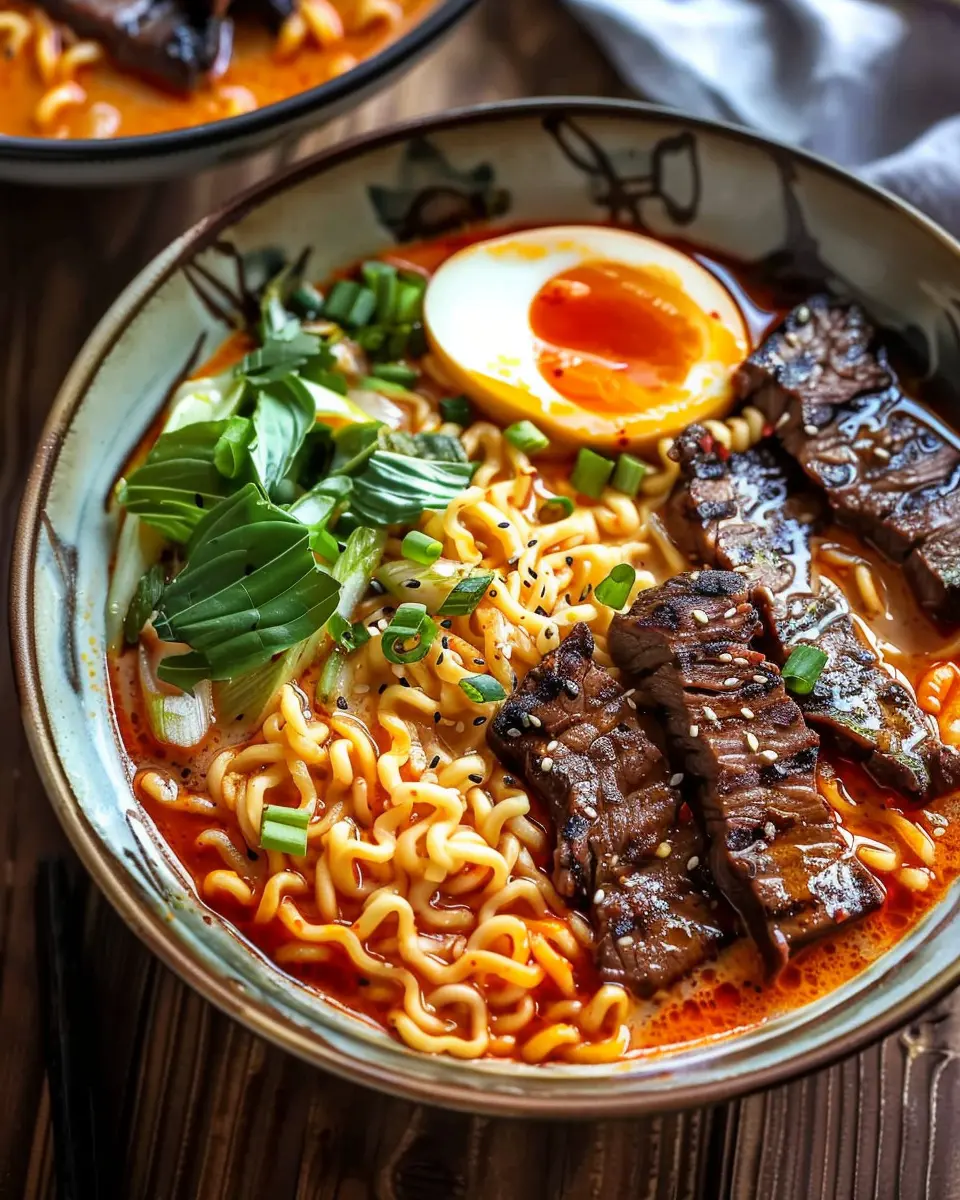
Serving suggestions for Spicy Korean Ramen
When it comes to enjoying your spicy Korean ramen, pairing it with the right side dishes can elevate the entire experience. Consider serving:
- Steamed Dumplings: These are perfect for dipping into soy sauce or chili oil. Their savory flavor complements the heat of the ramen beautifully.
- Kimchi: This traditional Korean side adds a tangy crunch and extra spice, balancing the creamy sauce in your ramen.
Elevate Your Dish with Garnishes
Make your spicy Korean ramen not just tasty, but also visually stunning! Here are a couple of simple yet effective garnishes:
- Green Onions: Chopped finely, they add a fresh touch and bit of color.
- Sesame Seeds: A sprinkle on top creates a delightful contrast and provides a nice nutty flavor.
Additionally, don’t forget about a drizzle of chili oil for that extra kick. You might just be surprised at how these little touches transform your dish. Want more inspiration? Check out some top recipes on Serious Eats and see how others are serving it up!
Time breakdown for Spicy Korean Ramen
Preparation time
Getting everything ready for your spicy Korean ramen is key to a smooth cooking experience. Set aside about 10-15 minutes for meal prep. This includes slicing your beef, mincing garlic, and gathering your delicious ingredients.
Cooking time
Once everything is prepped, you’re looking at roughly 15-20 minutes of cooking time. This allows you to grill your beef to perfection, simmer your broth, and mix in all the flavorful components of the creamy sauce.
Total time
In total, you’ll spend about 30-35 minutes from start to finish. Not too shabby, right? If you’re ever in a hurry, consider trying this guide on quick meal prepping to streamline your kitchen time! Enjoy your culinary adventure!
Nutritional facts for Spicy Korean Ramen
When diving into a bowl of spicy Korean ramen, understanding its nutritional profile can elevate your dining experience. Here’s a quick breakdown:
Calories
A typical serving contains around 500 calories. This makes it a hearty option for a satisfying meal, especially when you’ve had a long day at work.
Protein
You can expect approximately 20 grams of protein, largely thanks to the grilled beef. This is a great boost for muscle recovery and keeps you feeling full longer.
Sodium
Keep an eye on sodium intake; a typical serving has about 1,800 milligrams. This is primarily due to the ramen noodles and seasoning, so consider balancing it with fresh veggies or lowering the seasoning for a healthier spin.
For further insights on nutrition, check out resources from the USDA or NutritionData, which provide detailed food profiles. Enjoy your flavorful journey with spicy Korean ramen!
FAQs about Spicy Korean Ramen
Can I use different noodles for this recipe?
Absolutely! While traditional spicy Korean ramen typically calls for instant ramen noodles, feel free to get creative. You can substitute with udon, soba, or even rice noodles, depending on your preference. Just keep in mind that the cooking time may vary, so check the package instructions to ensure you get that perfect texture.
What’s the best way to store leftovers?
We all love a good spicy Korean ramen experience, and leftovers are a bonus! To store, simply transfer any remaining ramen into an airtight container and refrigerate it. It should stay fresh for up to three days. When you're ready to enjoy it again, just reheat gently on the stovetop. You might want to add a splash of broth or water to loosen up the creamy sauce, making it as delightful as the first time!
How can I adjust the spice level?
If you’re a spice enthusiast, you’re in for a treat with spicy Korean ramen! However, if you prefer a milder kick, there are simple adjustments you can make. Start by reducing the amount of gochujang or red pepper flakes in the recipe. Alternatively, you can add sweeter ingredients like grated carrots or a dash of honey to balance the heat. Remember, it's all about finding the right blend that suits your taste buds!
For more tips and variations, check out resources like Maangchi or Korean Bapsang to explore the depths of Korean cuisine and spice levels.
Conclusion on Spicy Korean Ramen
When it comes to quick meals, fast food often calls to us, but there's truly no substitute for embracing homemade options like spicy Korean ramen. Not only do you get to control the ingredients—think lean grilled beef, creamy sauces, and flavorful spices—but preparing your own meals can also become a rewarding part of your routine.
Imagine enjoying a steamy bowl of ramen after a long day—comforting, satisfying, and guilt-free! Plus, cooking can be a great way to unwind. So, why not trade that drive-thru for a cozy night in? Check out the benefits of cooking at home on resources like Healthline to inspire your culinary adventures!
Dive into the joy of homemade meals with this spicy Korean ramen recipe—it’s a delicious way to elevate your dining experience.
PrintSpicy Korean Ramen: Indulgent Grilled Beef & Creamy Sauce Delight
Experience a bold flavor explosion with this Spicy Korean Ramen featuring tender grilled beef and a rich, creamy sauce.
- Prep Time: 10 minutes
- Cook Time: 15 minutes
- Total Time: 25 minutes
- Yield: 2 servings 1x
- Category: Dinner
- Method: Stovetop
- Cuisine: Korean
- Diet: None
Ingredients
- 2 packs Korean ramen noodles
- 200 grams grilled beef, sliced
- 1 cup heavy cream
- 3 tablespoons gochujang
- 1 tablespoon soy sauce
- 2 cloves garlic, minced
- 1 teaspoon sesame oil
- 1 green onion, chopped
- 1 tablespoon sesame seeds
Instructions
- Cook the ramen noodles according to package instructions.
- In a skillet, heat sesame oil and sauté garlic until fragrant.
- Add gochujang and soy sauce, then stir in the heavy cream, mixing well.
- Combine the cooked noodles with the sauce in the skillet, tossing to coat.
- Serve with grilled beef on top and garnish with green onions and sesame seeds.
Notes
- Adjust the spiciness by modifying the amount of gochujang.
- This dish pairs well with a side of kimchi.
Nutrition
- Serving Size: 1 bowl
- Calories: 600
- Sugar: 3 grams
- Sodium: 1200 milligrams
- Fat: 40 grams
- Saturated Fat: 20 grams
- Unsaturated Fat: 15 grams
- Trans Fat: 0 grams
- Carbohydrates: 45 grams
- Fiber: 3 grams
- Protein: 25 grams
- Cholesterol: 80 milligrams
Keywords: Spicy Korean Ramen, Grilled Beef, Creamy Sauce, Korean Cuisine




Leave a Reply